A Noble Task, Not an Office: Reading 1 Timothy 3:1

Is It Wrong for a Woman to Want to Lead? What 1 Timothy 3:1 Says “Whoever aspires to be an overseer desires a noble task.” (1 Timothy 3:1, NIV) “If a man desire the office of a bishop, he desireth…



Is It Wrong for a Woman to Want to Lead? What 1 Timothy 3:1 Says “Whoever aspires to be an overseer desires a noble task.” (1 Timothy 3:1, NIV) “If a man desire the office of a bishop, he desireth…
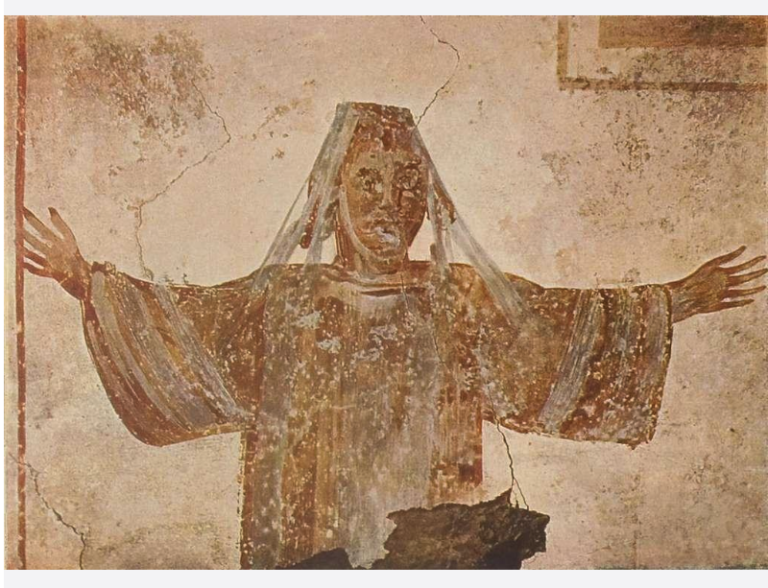
Content note: this post mentions torture and martyrdom. In the second century, a Greek philosopher named Celsus wrote a long attack on Christianity. One of his favorite insults was about who the Christians were. He sneered that they could only…

Explore the true context of 1 Timothy 2:12 and discover how cultural background, Greek language, and Paul’s broader writings reshape our understanding of women’s roles in church leadership.

The goal of any Bible translation should be to accurately convey the meaning of the original text in a way that is clear and accessible to its audience. Gender-accurate translations achieve this by using inclusive language when appropriate, ensuring that the message of God's Word reaches all people, regardless of their gender.

Some translation choices are big and obvious. Others are two small words you’d never notice unless you set translations side by side. Romans 12:6–8 has two of the small ones. What the ESV says In Romans 12, Paul lists the…

I followed the footnote, and it didn’t hold up I was reading 1 Corinthians 14 in my old ESV Study Bible. When I got to verse 34, “the women should keep silent in the churches… as the Law also says,”…

Most readers of 1 Corinthians 14:36 never notice it. It isn’t highlighted in translations, and it’s rarely explained in sermons. Yet within this single verse is a small linguistic detail that has the potential to reshape how the entire passage…

The headings in your Bible weren’t written by Paul. Neither were the chapter numbers or the verse numbers. Chapters were added around the 1200s, and verse numbers in the 1550s. The section headings, the bold lines like “Wives and Husbands,”…

Have you ever finished a chapter of the Bible and realized you couldn’t say what it was about? Or read a verse that seemed to say something you couldn’t believe God would say? The problem usually isn’t you, and it…

Discomfort is a natural part of growth and learning. When we encounter ideas or experiences that challenge us, we're forced to confront our own assumptions and biases. This process can be uncomfortable, but it's also essential if we want to grow and mature as individuals.